
When it comes to planning a successful campaign, your bidding model can be a decisive factor. It’s not only about the classic dichotomy CPC vs. CPM — bidding models have more nuances to them.
For instance, our friends from RollerAds have at least three types of Cost Per Click models: CPC, SmartCPC, and CPA Goal. In this article, we will highlight the differences between them and explain which bid models are best suited for initial tests.
By the end of this article, you’ll know about the advantages of each bid model and learn how to pick the optimal model for you. CPC, SmartCPC, and CPA Goal have their unique cases, and we’re here to explain what they are all about and when to use each model for maximum efficiency.
Know Your Bid Models
Before we begin testing, let’s review the bid models featured in the case study. If you’re already adept at distinguishing them, feel free to skip ahead to the testing part.
CPC
This model is the classic Cost Per Click (CPC). You set a fixed price, and that’s precisely what you pay every time someone clicks your ad. Simple and straightforward.
SmartCPC
SmartCPC lives up to its name, as it is still CPC, but with a twist—or rather, a tweak. SmartCPC automatically adjusts your bid in real time to match the auction price without overpaying. It’s great for launching efficient campaigns and discovering your best-performing zones and feeds.
CPA Goal
While SmartCPC is designed to get you the best-priced clicks, CPA Goal adjusts bids to hit your target CPA: it lowers them in expensive zones, raises them in cheaper ones, and cuts out the underperformers entirely. For new zones, it uses campaign averages to bid intelligently.
Time to Start the Tests
For this case study, a sweepstakes offer was chosen, and kicked off three separate campaigns using CPC, SmartCPC, and CPA Goal models.
Additionally, discover top sweepstakes offers on Mobidea.
- Ad format: Push
- Category: Sweepstakes
- GEO: United States
- Device: Mobile
- OS: Android
- Payout: $3
Taking CPC for a Spin
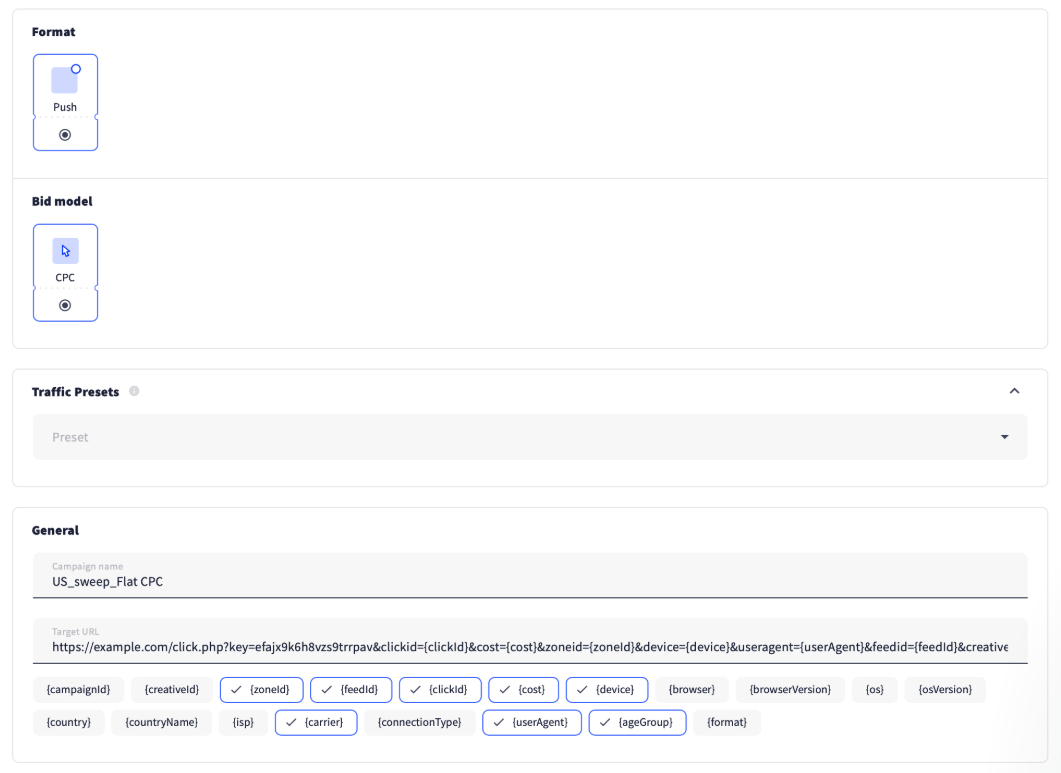
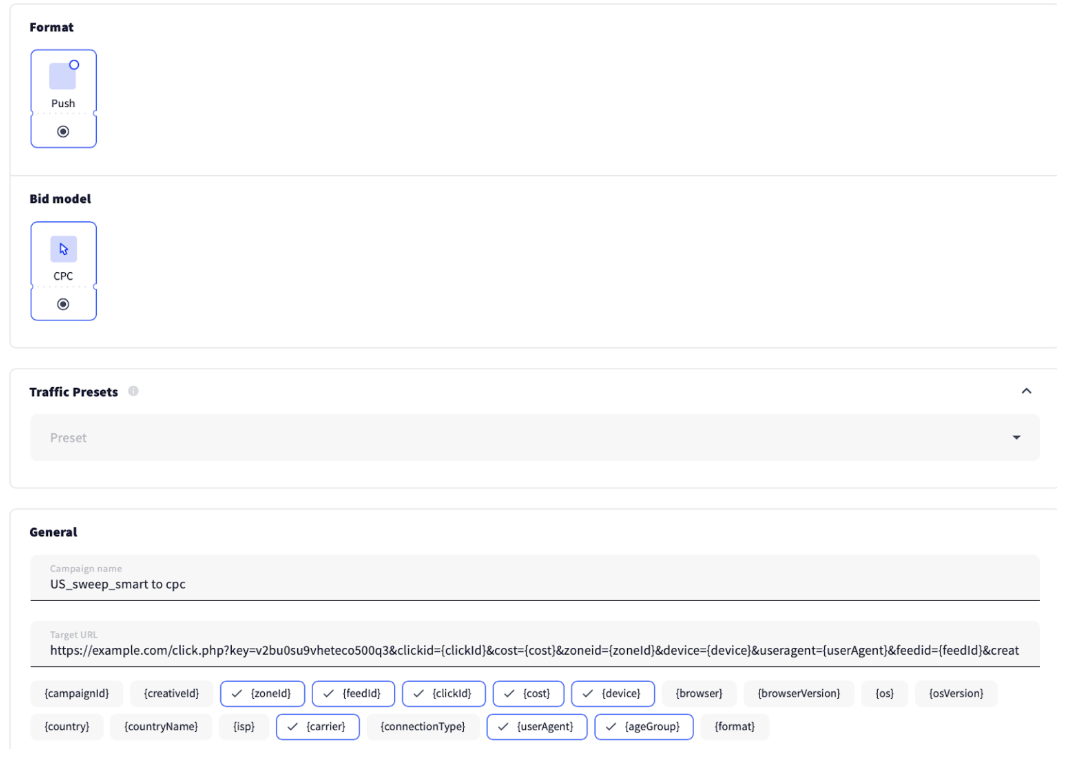
As usual, all the standard details have to be filled in to start the campaign: picking the ad format, deciding on a bid model, naming the campaign, and entering a URL.
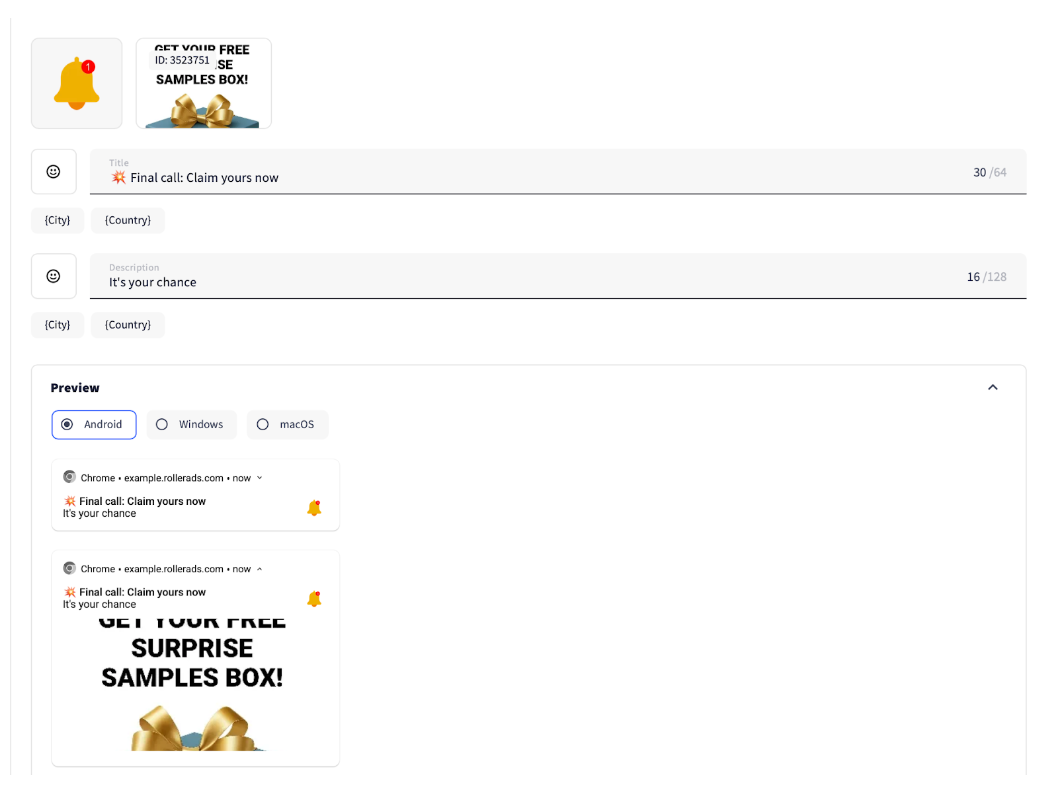
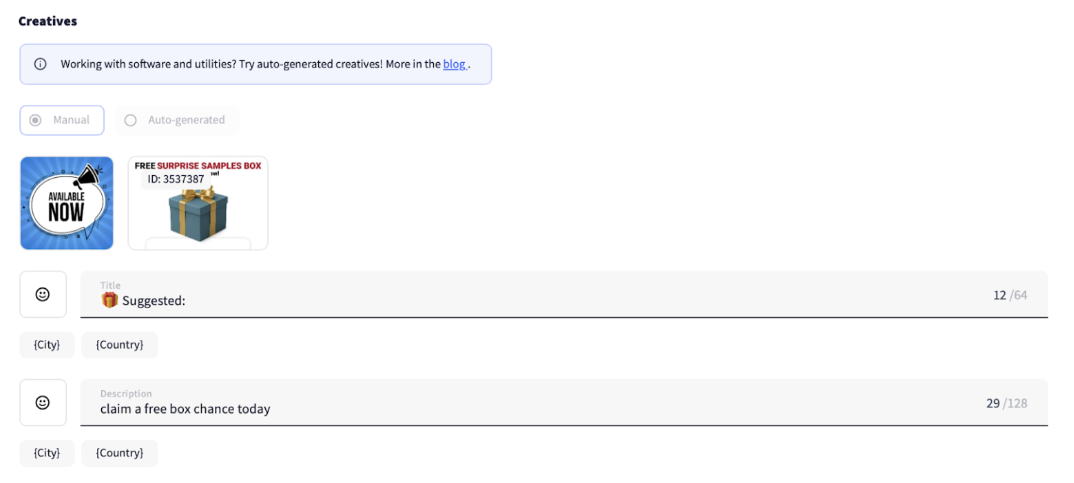
RollerAds also uploaded 10 different creatives that fit the offer. Using this many creatives is a smart move, as it helps you quickly identify the top-performers and gives you plenty of options to adjust during the optimization phase.
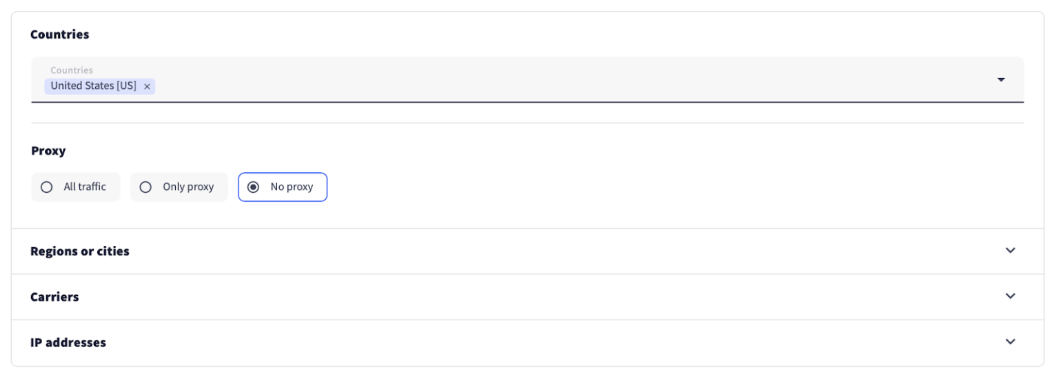
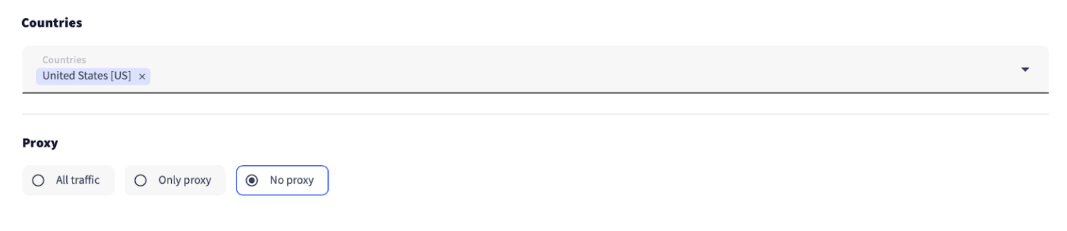
They targeted the United States and made sure to block proxy traffic.
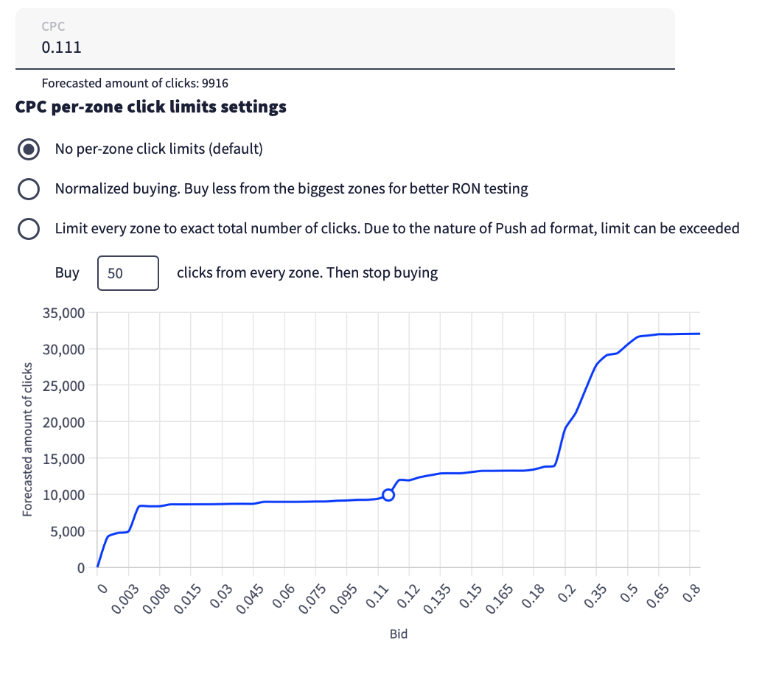
The bid was set at $0.111, a figure determined by prior experience with this category and GEO.
If you’re a seasoned affiliate marketer with a good feel for the numbers, go ahead and rely on your know-how. But if you’re just starting out, it’s a good idea to check with your account manager to avoid any costly mistakes.
Next, RollerAds established the daily spending limit and selected a subscription age of 0 to 3 days to reach the most engaged users.

They also paid close attention to all the additional targeting requirements listed in the offer.
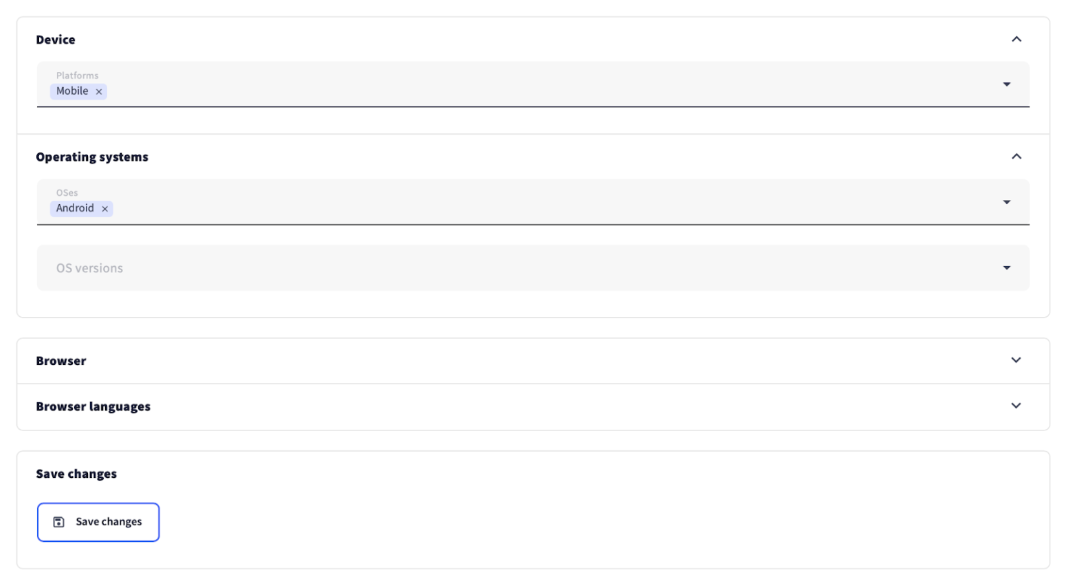
With all that complete, the test campaign was all set and sent off for moderation.
Launching the SmartCPC Test
For this one, RollerAds followed the same procedure as the CPC test, but skipped the manual bid settings. Since smart bid models automatically find the best price, there’s no need to set one. RollerAds advises against setting a maximum bid to ensure you don’t miss out on valuable, higher-cost traffic sources.

The other targeting settings and creatives were identical to the previous test.
Kicking Off the CPA Goal Test
The CPA Goal model automatically adjusts bids and traffic flow to hit your target cost-per-action. For the model to work, you need to send data on conversions to your ad network, which is done by setting up a postback. If you’re unsure what it is or how to get it running, RollerAds has a detailed guide on their blog.
For the target CPA, they entered $3, matching the offer’s payout. The zone test limit was set slightly higher—at $4. While the usual advice is to double the target CPA, RollerAds opted for $4 as a middle ground. This gave the system a chance to test more traffic in each zone without being too tightly restricted by the conversion payout.
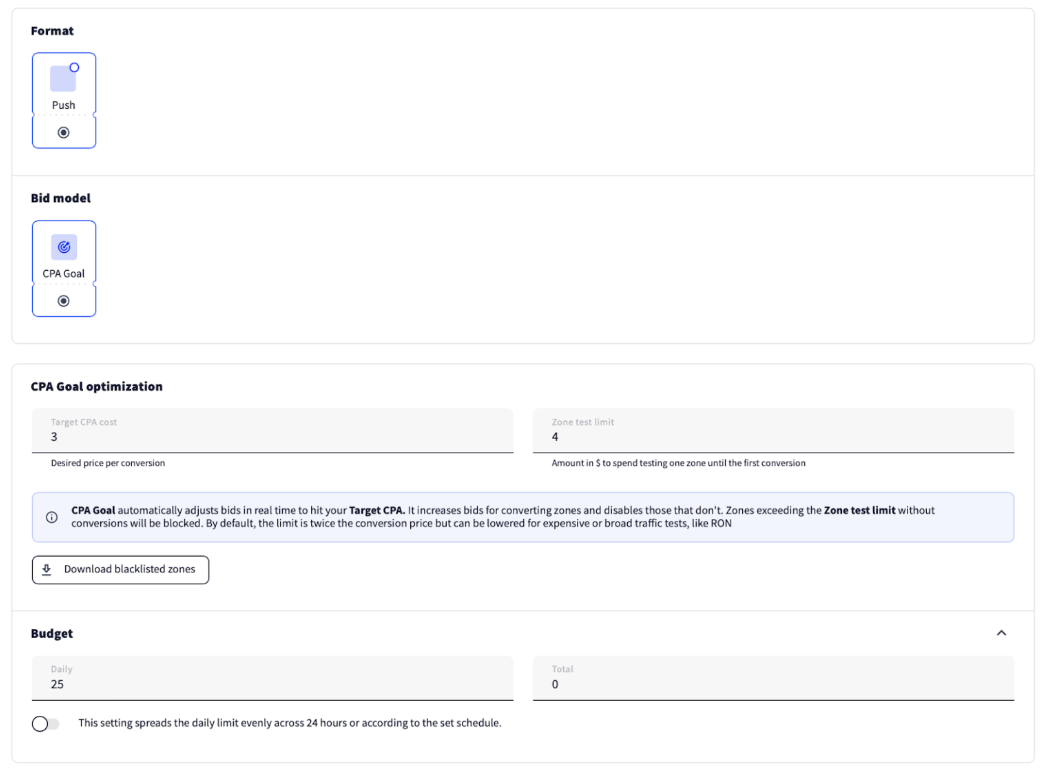
A daily budget was set, and the same targets and creatives were used as earlier to maintain fair testing.
Optimizing the Tests
Let’s see the results from the first day of testing for all three models.

The RollerAds team went for roughly the same test budgets for each bid model. At this early stage, CPA Goal appeared to be performing more efficiently, though there weren’t enough conversions to be certain. However, there was enough data to remove clearly underperforming elements and continue the experiment. An interesting note was that CPA Goal let them test more expensive traffic, with a CPC over twice as high as the others.
Now, onto the optimization phase.
For the standard CPC test, they blocked zones that delivered a high number of clicks but zero conversions.

They also removed creatives using the same logic. They kept one creative that was actually working and four others that hadn’t received any traffic yet, to see how they would perform.
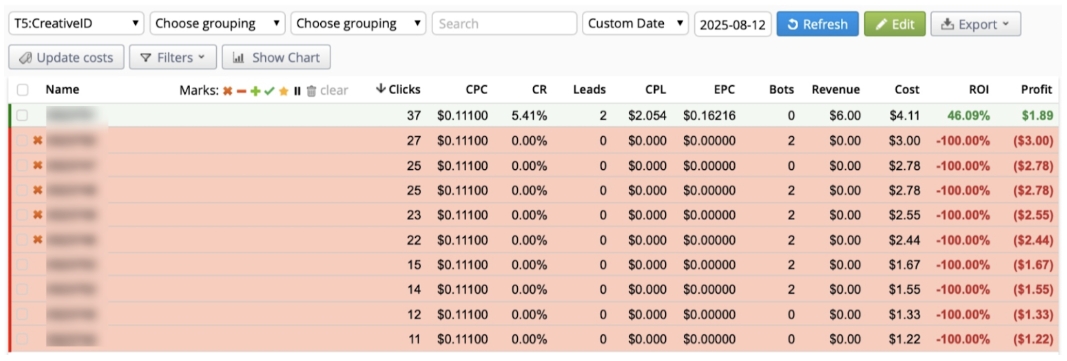
In the SmartCPC test, they applied the same strategy to zones…

…and creatives.
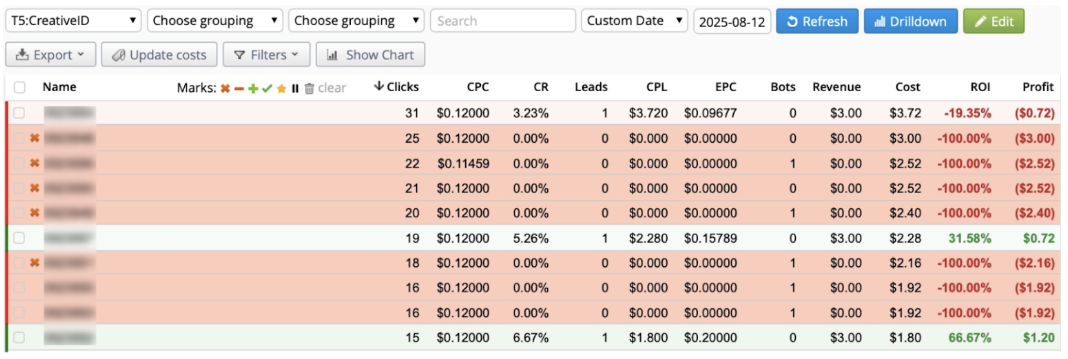
Even though the CPA Goal model is automated, it still needs oversight. The RollerAds team blocked a couple of zones that, while under the spending limit, were delivering the poorest results.

They also turned off the creatives that weren’t working.
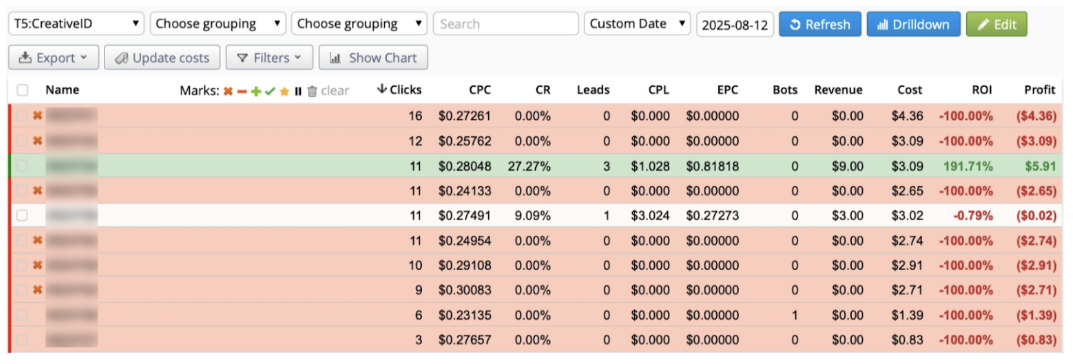
The results from the second day were as follows:

Insights from the Test
The final results after the test are shown here:

Even after all the optimization, the standard CPC campaign was unprofitable with a -72.14% ROI, so they had to cut their losses and shut it down (but wait for it). In contrast, both SmartCPC (-33.48% ROI) and CPA Goal (-36.27% ROI) showed much more promise. These models allowed RollerAds to build whitelists of successful zones and creatives, creating a solid foundation to scale from, recover costs, and eventually achieve profit—as you’re about to see.
CPC Redemption Using SmartCPC Insights
While it’s possible to scale directly within the ongoing SmartCPC campaign by excluding underperforming zones, adding new targets, and setting custom bids, RollerAds decided on a different path. The plan was to launch a new CPC campaign to pull the maximum amount of traffic from their proven whitelist of zones and feeds.
This meant building a new campaign from scratch.
They uploaded their creatives.
Specified the GEO and blocked proxy traffic.
After reviewing the data from the SmartCPC test, they settled on an average bid of $0.095. This price point proved ideal for securing traffic from the main converting feeds.
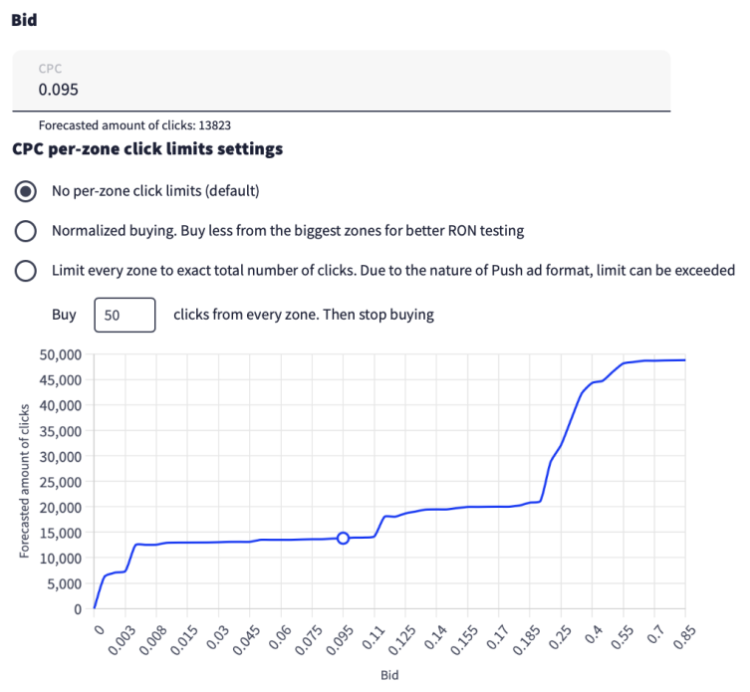
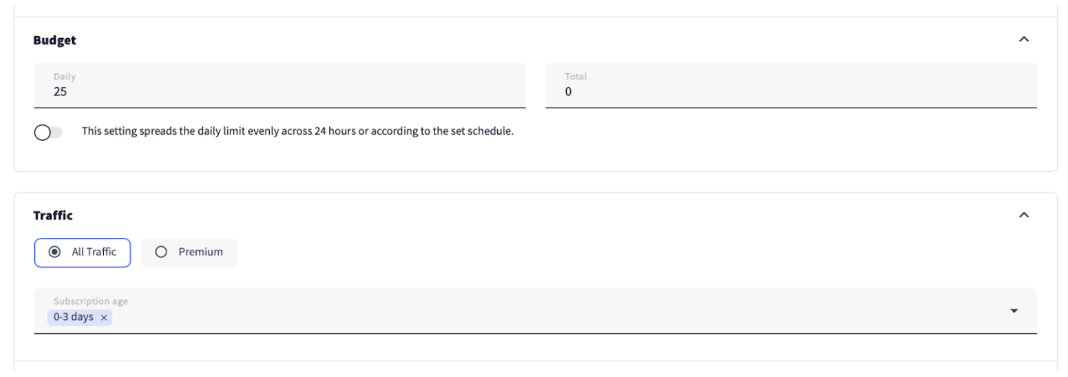
To begin with, they kept the budget low, planning to test the waters before committing more funds. The subscription age was again set to 0–3 days to match their initial target audience.
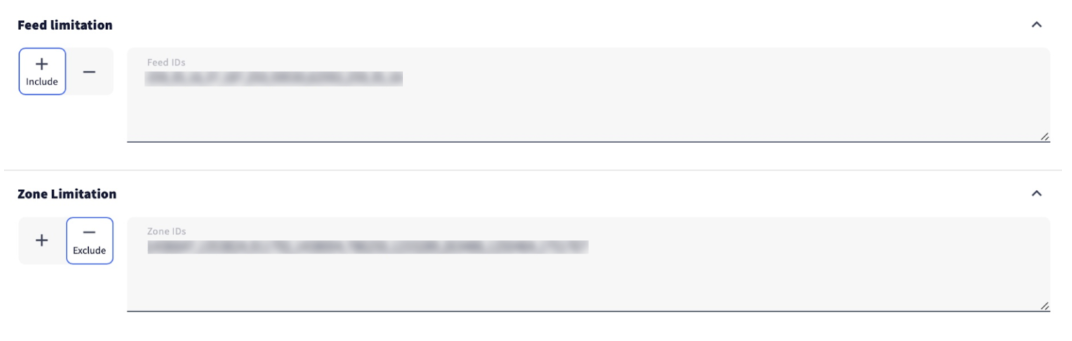
The key step was using the whitelist of high-performing feeds to focus all scaling efforts there. They also added a blacklist of zones and feeds to avoid any traffic that brought insufficient results.
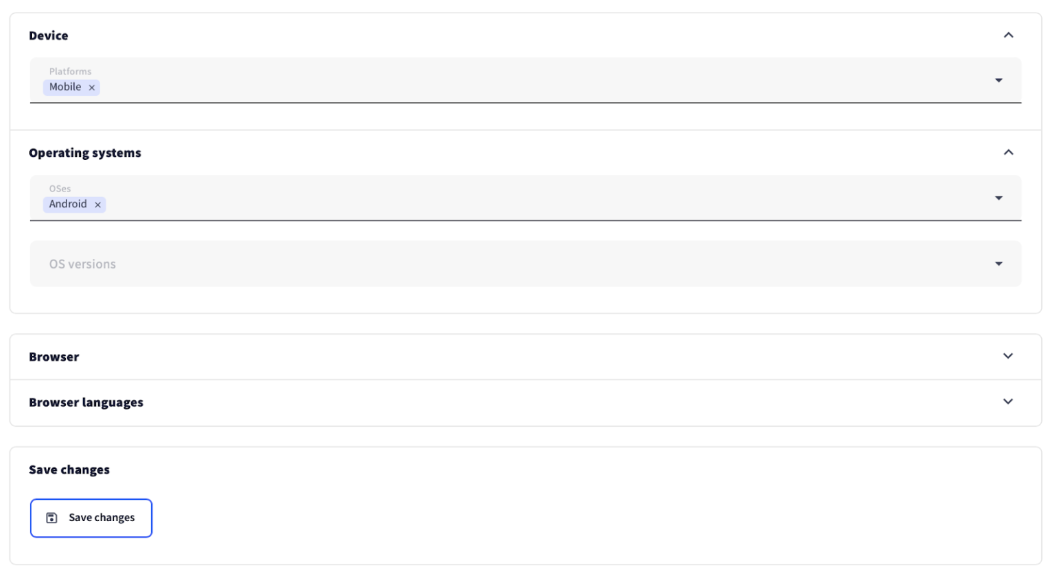
Media buyers also added device and OS targets that aligned with the offer’s requirements. With everything set, the campaign was sent for moderation.
Fine-Tuning the Scaled CPC Campaign
Once the traffic started coming in, media buyers began the optimization process. As always, they first paused any zones that failed to deliver results.

The same went for the creatives.
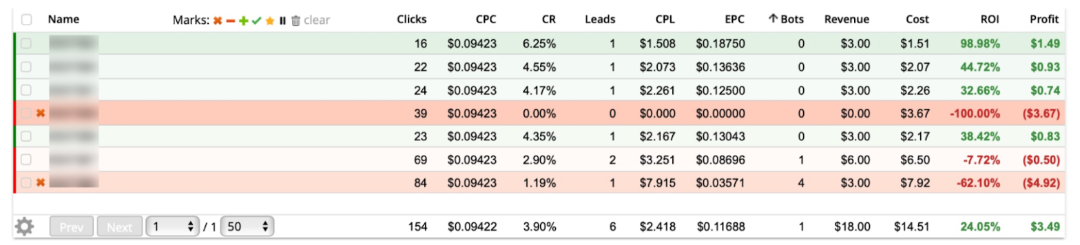
To further perfect their targeting and secure high-converting traffic, media buyers removed underperforming OS versions.
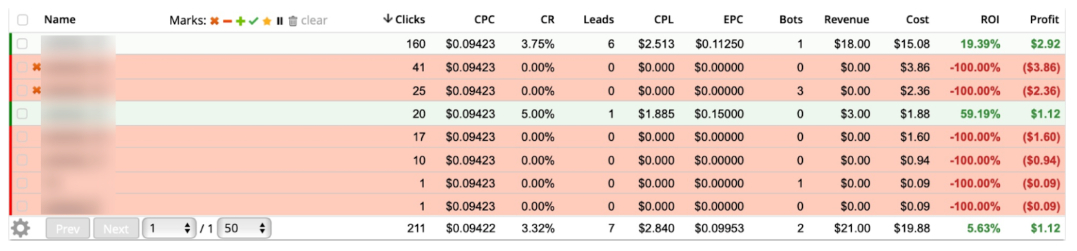
With the campaign now fine-tuned and performing well, it was time to increase the budget. This allowed RollerAds to grab more traffic and maximize potential profit.

After just two days of running, the campaign was already showing substantial results.
Results of the CPC Scaling
The whitelist built during the original SmartCPC test was the cornerstone of this new CPC campaign’s success. This focus meant the traffic was well-targeted and a perfect match for the offer, which ultimately led to profitability. This was a stark contrast to the initial SmartCPC test, which involved experimenting with all the traffic channels the platform suggested.
The final outcome was very promising—a 15.70% ROI, a massive improvement over the -33.48% ROI from the initial test.

Scaling the CPA Goal Test
For scaling the CPA Goal test, RollerAds notes there are two primary methods. The first is to build a whitelist of converting zones and launch a separate CPC campaign, just like with the SmartCPC test. The second is to optimize and scale directly within the existing CPA Goal campaign.
Based on their results, they chose to scale within the original campaign. It had already been optimized successfully, delivering high conversion rates and traffic from profitable zones. Generally, it is ill-advised to launch a CPC campaign with a fixed bid of $0.4 against a payout of $3. But CPA Goal automates the bidding process, allowing to explore both affordable and premium traffic sources, so the media buyers took the risk.
The advantage of scaling within the same campaign is the ability to analyze performance data across the entire campaign period, tests included. This in turn provides a complete picture of campaign performance.
But enough praise for the CPA Goal—let’s get into the scaling details. Here’s a reminder of the results before scaling began:

The optimization continued. After blocking a few unprofitable zones, media buyers focused on pausing any remaining zones that were still not generating conversions.
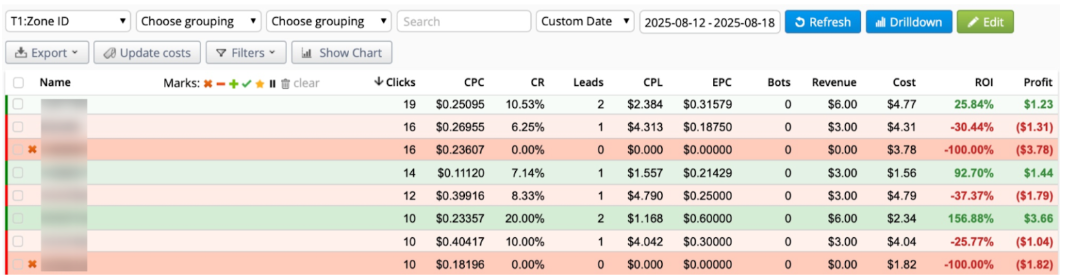
On the second day of scaling, they continued the strategy, excluding most of the red lines.
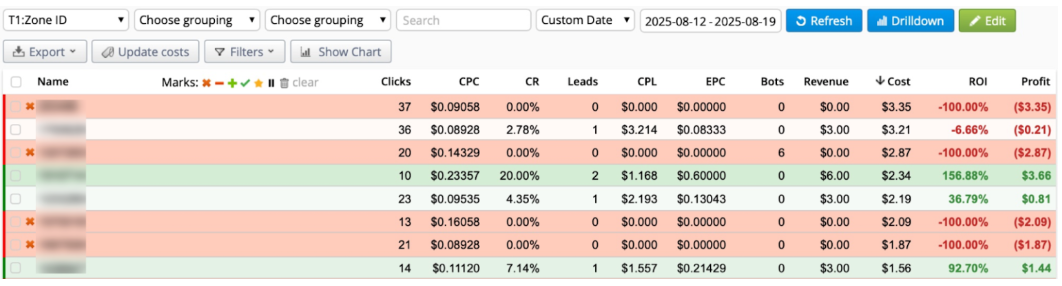
Then media buyers compared the new traffic from the first and second days of scaling and stopped any unproductive zones once again.

Creative optimization was just as crucial. Media buyers designed new creatives inspired by the top performers to replace the ones removed earlier.
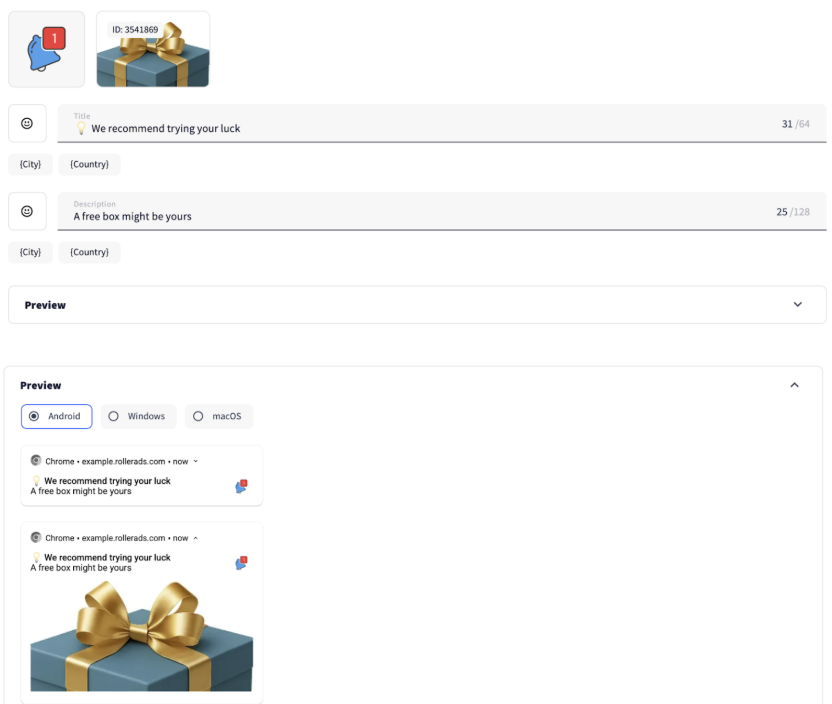
After adding them, the process was straightforward: they monitored the performance and cut any that didn’t pull their weight.
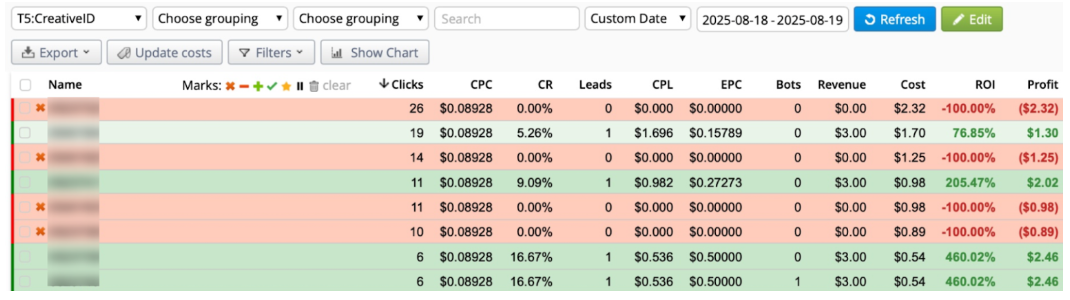
After two days of scaling, the results were outstanding: a 50.05% ROI, a dramatic turnaround from the -36.27% ROI after the initial test.

Scaled Campaign Results
Here is what both campaign scalings brought:

Let’s break down the numbers, including the initial SmartCPC test.
SmartCPC Test with CPC Scaling
When you combine the results from the initial SmartCPC test and the later CPC scaling campaign, the overall profit and ROI remain negative. However, this process provided a valuable insight—a refined whitelist. This is crucial for future scaling, which is likely to close the deficit and push performance into positive figures.
- Cost: $102.14
- Revenue: $96
- Profit: -$6.14
- ROI: -6.01%
Internal CPA Goal Test Scaling
- Cost: $107.76
- Revenue: $117.00
- Profit: $9.24
- ROI: 8.58%

The analysis shows that both SmartCPC and CPA Goal are excellent starting points for initial campaign testing. That said, CPA Goal holds a distinct advantage—it is more time-efficient and automatically accesses premium, higher-cost traffic zones that might be beyond the reach of a SmartCPC campaign.
Nevertheless, SmartCPC remains a solid choice when:
- The cost per conversion is particularly high.
- Your offer requires a two-step conversion process.
- You are unable to set up postback.
If your campaign fits any of these scenarios, opting for SmartCPC is a more reliable strategy.
Also read:
Closing words
As we’ve seen, each bid model is like a different tool. CPC can work if you really know your stuff, but it’s a bit of a gamble for a first try. SmartCPC is your best bet, when creating those all-important lists of what’s hot and what’s not. And CPA Goal is the time-saving choice to find the best traffic for your goals.
Just pick the right model for the job and keep a close eye on it. Start with a solid test, then scale up what you learn. Before you know it, you’ll be turning those early campaigns into real profit deliveries.
Feeling ready to give it a shot— we’ve got you covered. Register on RollerAds and use our promo code Mobidea50 for a +$50 bonus on the first deposit till December 31, 2025.


CPA Goal by RollerAds optimizes ad campaigns, automates processes, manages budgets efficiently, and helps achieve goals with minimal effort, maximizing the return on every ad investment.
RollerAds’ case study for Mobidea: CPC vs. SmartCPC—which bidding model is better for early tests.

Learn how to scale your campaigns on Push.House with an adult Nutra product.