
Nutra COD vs. Straight Sale Comparison
| Metric / Aspect | Cash on Delivery (COD) | Straight Sale (SS) |
|---|---|---|
| User Action | Enters Name + Phone Number | Enters Credit/Debit Card |
| Conversion Rate | Higher Easy, low-friction lead | Lower High-friction payment |
| Payout Realization | 30–60% Approval Call center drops, fake info, refusals | 90-100% Approval Payment cleared on the spot |
| Payout Speed | 20–30+ Days Net terms | Weekly Or faster |
| Metric that Matters | Approval Rate & EPC | Earnings Per Click (EPC) |
| Target GEOs | Tier 2 / Tier 3 Markets Low CC adoption | Tier 1 Markets US, CA, UK, EU – High CC usage |
| Creative Angle | Curiosity, soft angles — “free/easy trick” | Value, trust, problem/solution, authority |
| Pre-Lander Goal | Get an easy form submission | Warm up, address objections, justify purchase price |
| User Expectation | “Someone will call me about this” | “I am buying a product online right now” |
Why Switch from COD to SS
-
The payouts are often higher.
In COD, the advertiser prices commission around the fact that maybe only 10-25% of leads ever confirm.
In effect, payouts are lower.
With SS, every payout is a real, closed transaction, so it’s priced higher.
-
You control your own money.
In COD, your income depends on a call center you never see and can’t optimize.
A bad agent or a bad day on their end costs you a sale your targeting already earned.
In SS, once your page closes the sale, nobody downstream can drop the ball on you.
You have that control (which is a double-edged sword, but we’ll talk more of that later).
-
You get way richer tracking.
COD gives you basically two data points: form submitted, or confirmed/approved.
SS lets you track quiz started, quiz completed, add to cart, checkout reached, purchase.
That means you can actually see where people fall off the funnel and fix that exact spot.
-
It opens the door to bigger markets.
COD mostly works where card culture hasn’t taken hold (Africa, MENA, South Asia).
SS is what gets you into Tier-1 and Tier-2 GEOs where budgets are bigger and targeting tools are more sophisticated.
A lot of advertisers don’t even run COD in those markets at all, so you’ll have more options for SS offers, especially in the nutra vertical.
-
Campaigns can live longer.
SS marketing funnels built around video sales letters are harder for automated moderation to scan and harder for competitors’ spy tools to rip off, since they can usually only grab a static ad or landing page, not the actual video.
That can mean your winning combo survives a lot longer before it gets flagged or copied.
Stacking all of that up: safer payouts, income that depends on you instead of a stranger, sharper optimization data, access to richer markets, and potentially longer campaign lifespans.
That’s the main reason why affiliates are switching over.
Difference between COD and SS
The Conversion Process
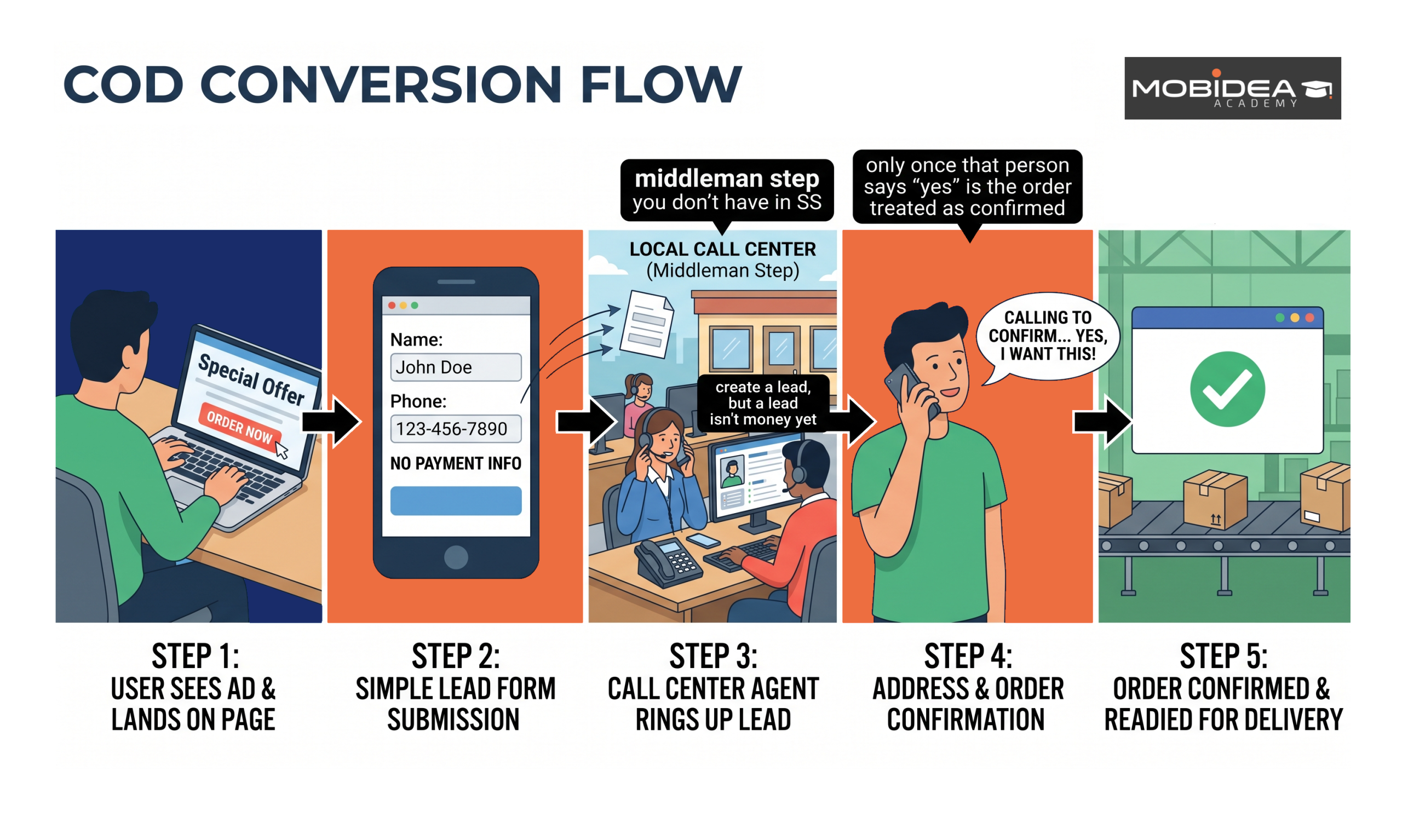
With COD, the whole thing runs through a middleman step you don’t have in SS, and that middleman is a call center.
Someone sees your ad, lands on the page, and all they have to do is type in a name and a phone number, no payment info at all.
That creates a lead, but a lead isn’t money yet.
A local call center agent then rings that person up, confirms the address, makes sure they actually want the product, and only once that person says “yes, I want this” does the order get treated as confirmed.
That’s when you, the affiliate, gets paid.
The reason this model exists at all is that in a lot of markets, especially places like Morocco, Pakistan, parts of Africa, plenty of people either don’t have a bank card or just don’t trust typing card details into a website they’ve never heard of.
Pay-on-delivery removes that fear completely, since nobody’s handing over money until the product is literally in their hands.
Straight sale skips that whole call center layer.
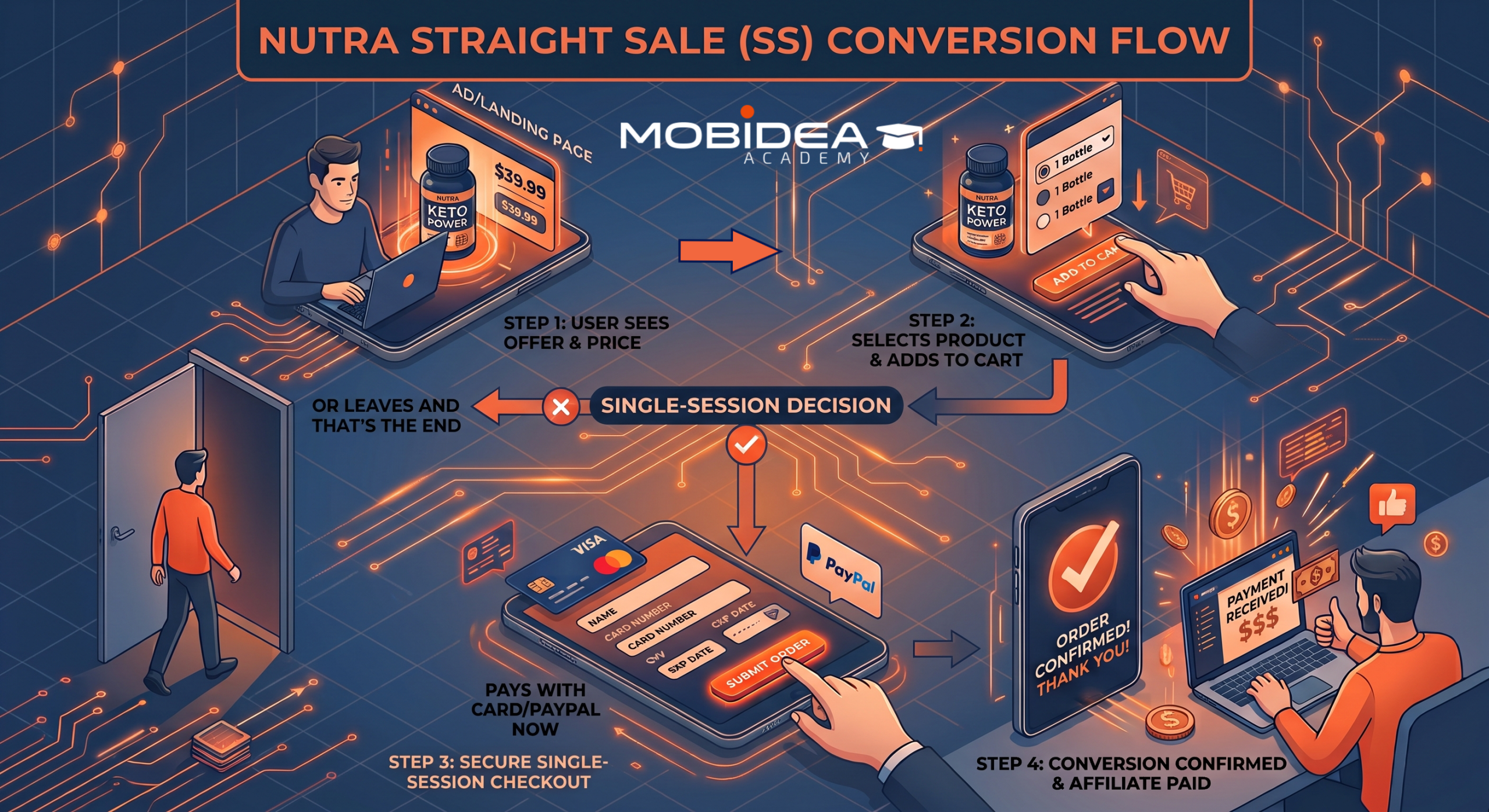
The person sees the price right there on the page, picks what they want, and pays with a card (or PayPal, or whatever’s set up) in that same session.
There’s no phone call, no second chance.
Either the page convinces them enough to pull out a card right then, or they leave and that’s the end of it.
But once they do pull out their card, enter those precious details and submits the form, the conversion is confirmed and you, the affiliate, gets paid.
The Metrics to Look Into
In COD, the “moment of truth” is the phone call, so the metric you actually care about is approval rate.
In affiliate networks that run COD offers, the approval rate is often equivalent to the conversion rate.
Industry-wide, approval rate’s usually somewhere around 10 to 15%, though a well-run call center operation can push it up into the 20s.
And once a lead gets confirmed on that call, your payout is basically locked in, even if the customer later refuses the package at the door.
In SS, they’ve got to actually pull out a credit card and pay.
Of course, fewer people are going to follow through on that, so expect to have lower conversion rates (CR).
So what should you look deeper into?
It’s the EPC.
It’s the most reliable metric since you rely on actual payouts versus the clicks on your page.
The EPC Reality Check: Stop Looking at CR
The biggest trap affiliates fall into is looking at Conversion Rate (CR) on Day 1, seeing a massive drop compared to COD, panicking, and killing the campaign.
- In COD: 1,000 clicks → 50 leads (5% CR). But with a 50% approval rate, only 25 actually pay out.
- In SS: 1,000 clicks → 10 sales (1% CR).
Even though the CR dropped from 5% to 1%, all 10 SS sales are guaranteed payouts immediately.
Depending on payout rates, a 1% SS CR can yield a far higher EPC (Earnings Per Click) than a 5% COD CR that gets slashed by approval delays.
What to Do When Shifting from COD to SS
Moving from COD to SS means shifting from capturing impulse leads to earning active buyers.
When a user buys a COD offer, they are only committing to a phone conversation later.
When a user buys an SS offer, they are pulling out a credit card and handing over cash on the spot.
That difference changes everything about how you target and write ads.
What to Change with Creatives
The honest answer here is a little counterintuitive: you mostly don’t need to reinvent your creative playbook.
Surprised?
Well, the truth is that the stuff that already works in COD still performs just as well with SS.
I’m talking about:
- medical or authority angles
- personal transformation stories
- quizzes
- native-feeling content
- hooking someone through a problem or highlighting their pain points
You can get away with a pretty aggressive or exaggerated promise in COD, because even if the lead’s expectations are a little off from reality, a call center operator is standing by to smooth that gap over and still close the sale.
But with SS, there’s nobody there to save that mismatch.
If your ad screams “free” or way overstates the result, and then the offer page or checkout page reveals a price or a more modest reality, the person just closes the tab.
No argument, no negotiations.
The Hook and the Follow-Through
The creative work isn’t really about changing your angles, it’s about making sure the promise reflects what is shown on the payment page.
SS mainly demands attention on the funnel itself.
If a campaign’s struggling, look at the page and the offer before you look at the audience.
Is there a disconnect?
The key here is to Stop Teasing, Start Pre-Selling.
Drop your clickbait-y approach, the shock value style, or the ultra-soft “one weird trick” angles.
Quick example”
The COD Creative Approach (Soft Angle)
“Try this simple fruit tonight to melt belly fat fast.”
Why it works in COD: Curiosity is enough to get a name and phone number on a form.
The SS Creative Approach (Trust & Solution Angle)
“Struggling with joint stiffness after 50? How a natural daily supplement formula supports mobility—without doctors or prescription costs.”
Why it works in SS: It sets clear expectations. The user knows this is a physical product they will purchase to solve a specific problem.
Pre-qualify the Users
This may reduce your audience at the landing page itself, but it will improve the quality of users that you’ll deliver to the offer or checkout page, which is what matters, right?
To do this, you need to:
1. Qualify the user in the ad
Hint at a premium solution or product rather than a “free trick.”
This weeds out window shoppers who will never enter a card.
2. Shift from shock to authority
Use expert positioning, clinical study references, or relatable problem-solution storytelling.
3. Product-forward visual cues
Show realistic product containers, clean ingredients, or clear usage scenarios instead of sensationalized curiosity hooks.
The Warmer, the Better
Quiz-type funnels work really well because the user is already investing his time and effort.
This shows verified interest.
But to further get them invested on the offer, you can include the following on the next part of your funnel:
- Price Justification: Clear explanations of why the product costs what it does (e.g., high-quality ingredients, formula purity).
- Risk Reversal: Money-back guarantees, satisfaction seals, and secure checkout badges.
- Social Proof: Verified customer reviews, before-and-after cases (compliant), or testimonial sections.
- Bundle Value: Multi-bottle discounts (e.g., Buy 3 Get 2 Free) to increase Average Order Value (AOV) and drive up your EPC.
Top Ad Creative Format: Video Sales Letter
One tool that gets used a lot more heavily in SS than COD is the VSL.
It’s especially common on Facebook and native ad networks, and tends to do best in geos like the US, UK, and Norway.
The tradeoff is with a video is that it naturally loses more people upfront since not everyone sticks around to watch the whole thing.
But the people who do finish it convert at a noticeably higher rate, and refund rates on that traffic tend to be very low.
Because by the time someone buys, they actually understand what they’re buying.
There’s also a side benefit worth remembering from what we touched on earlier, video is just harder for automated ad moderation and competitor spy tools to scan and rip off, so a good VSL funnel can sometimes stay alive and be profitable a lot longer than a text-based one would.
What to Change with Targeting
When it comes to narrowing down your audience, I want to be honest that there isn’t a clean, one-line answer.
To better illustrate, let’s discuss an example.
In one documented test on a weight-loss offer, an affiliate left the creative and pre-lander completely untouched and only changed the targeting.
The affiliate was using Meta Ads.
They narrowed the age range to 45-65+ and restricted placements to Facebook and Instagram feed only.
These changes alone turned a losing campaign into a profitable one.
However, there was also one instance when the campaign was improved when the pre-lander was changed (keeping audience settings the same as before).
So here are some quick tips to follow:
- If people are clicking but barely making it past the first step of your funnel, that’s usually a targeting problem.
Wrong crowd entirely.
- If they’re making it deep into the funnel, like reaching checkout, and still bailing there, that’s a funnel and trust problem, not a targeting one.
But if you’re looking for something to start with when it comes to setting the targeting filters, here’s what we recommend:
- Tier / GEO Shifts: SS works best in Tier 1 GEOs (US, UK, CA, AU, Western Europe) where online credit card checkout is second nature.
- Demographics: Focus on demographics with disposable income.
For Nutra SS (e.g., joint health, keto, skin care, male enhancement, nutra patches, slimming teas, weight loss pills), the slightly older demographics (35–65+) work better.
They are actively seeking solutions for health issues and have established payment habits.
Micro-Event Tracking in Straight Sale Offers
A common question affiliates ask when making this transition is: Can I track sub-events like “Add to Cart” or “Checkout Reached” to retarget users who drop off?
Some affiliate offers do, some don’t.
Also, you may be able to track events, but you may not be able to retarget those users specifically.
If your tracking can only go as far as monitoring which users clicked on the Buy Now or Add to Cart button on your own landing page or quiz funnel, then you can still use that event to retarget them, especially if you’re using Meta Ads and other social platforms.
If retargeting is not an option, you can always aggregate numbers (how many people hit each stage) to diagnose where the funnel’s leaking, even without knowing exactly who those individuals were.
Final Thoughts
I’ll be straight with you though, I’m not going to pretend this is a slam dunk with no downside.
SS is a different kind of risk.
In COD, if your angle is a little sloppy, a call center operator can save the sale.
In SS, there’s no human in the loop, the landing page has to do all the convincing by itself.
So if your funnel isn’t built to actually sell someone, not just collect their info, this move can flop hard.
The truth is that the switch to SS requires not just a creative or targeting shift—it’s a mindset shift.
Stop chasing volume of cheap leads and start optimizing for actual buyer value!
Ready to take on the challenge?
We have dozens of Nutra Straight Sale offers in Mobidea right now.
Log-in to check them out or reach out to your affiliate manager for the best ones.
And if you haven’t done so yet, sign up with Mobidea today.
Let’s go make some money!


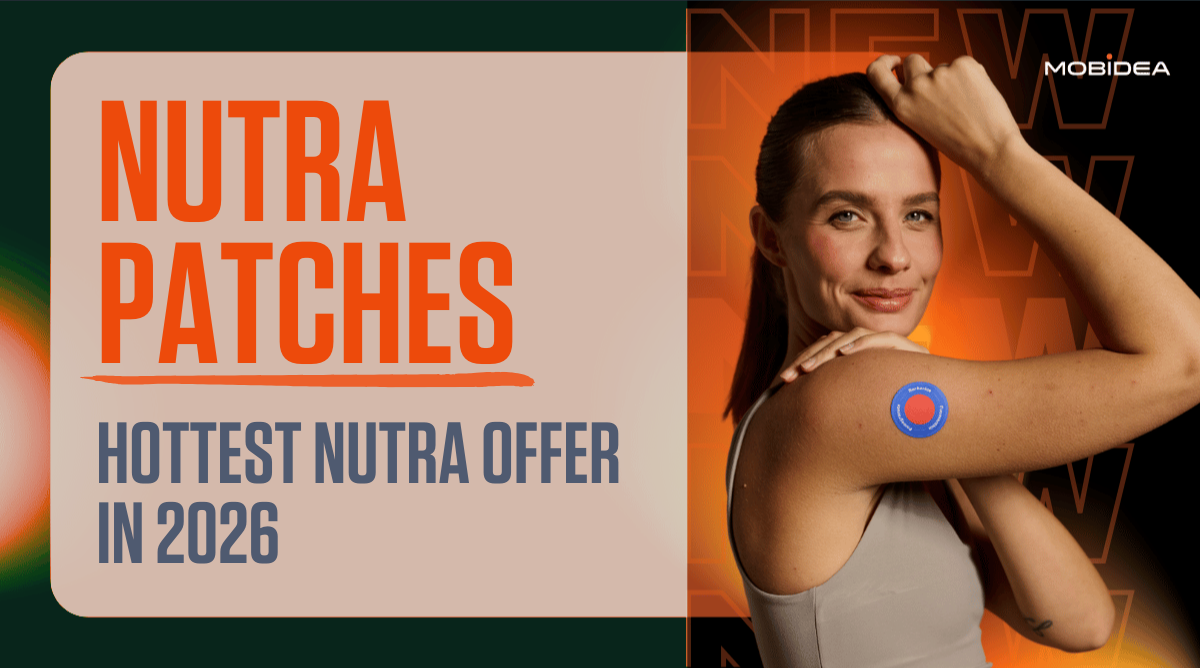
Want to earn from one of the hottest Nutra offers today? Don't start promoting Nutra Patches without reading this full guide!
The team at Tyver breaks down how media buyers can use their creative database to find proven ad angles in Gambling and Nutra — fast.
Weight loss is an affiliate marketing niche that never really slows down. Wanna try it? We've done our homework and we're now sharing with you how to promote weight loss pills effectively!